“After three months of therapy, I finally realized what was happening. Every time Maya left my consulting room, I felt utterly drained—not emotionally depleted, but cognitively exhausted. As if I’d been trying to follow a conversation in a language I almost, but not quite, understood.”
Maya was brilliant, articulate, motivated. She implemented every strategy I suggested with meticulous precision. Yet session after session, she seemed to be swimming upstream against some invisible current. Her homework was completed but felt forced. Her insights were profound but didn’t stick. She was working harder than any client I’d ever seen—and getting nowhere.
“I don’t understand what’s wrong with me,” she said during our fourth month together. “I know what I need to do. I write it all down. I set the reminders. But it’s like my brain just… refuses. Like there’s some part of me that’s sabotaging everything.”
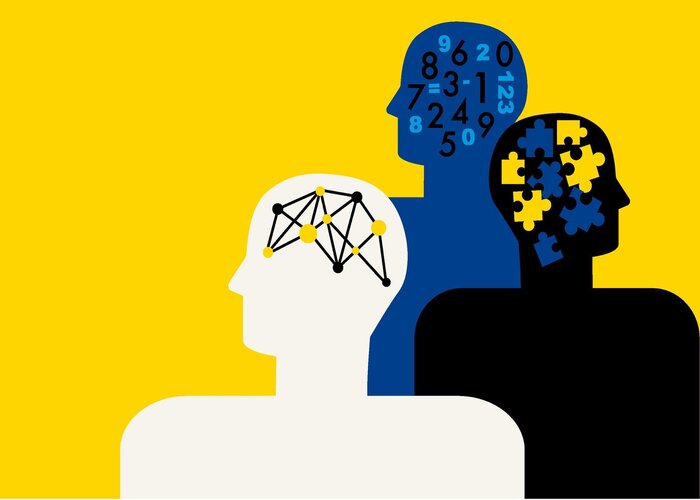
What if nothing was wrong with Maya? What if the problem wasn’t her motivation, her trauma responses, or my therapeutic approach? What if I’d been trying to fit a square peg into a round hole—attempting to apply neurotypical therapeutic frameworks to a beautifully neurodivergent brain?
The Misdiagnosis Epidemic You Haven’t Named
Contemporary therapeutic training equips us brilliantly for neurotypical brains—minds that process information linearly, regulate emotions predictably, and translate insights into behavioral change through conscious effort. But what happens when we encounter the estimated 5-7% of adults whose brains operate according to entirely different principles? That’s roughly 1 in 20 clients—meaning most practitioners encounter undiagnosed ADHD regularly, often without recognizing it.
Research in developmental neuroscience reveals that ADHD represents fundamental differences in executive functioning, emotional regulation, and attention systems (Barkley, 2015). Studies by Brown and Landgraf (2010) demonstrate that these neurological variations create specific therapeutic challenges: traditional CBT homework assumes working memory capacity that may be impaired; insight-oriented approaches rely on sustained attention that fluctuates unpredictably; trauma work requires emotional regulation systems that may be neurologically dysregulated.
Yet therapeutic training programs rarely address these neurological realities. We learn to work with resistance, but not with executive dysfunction. We study emotional dysregulation as psychological defense, but not as neurological difference. We’re taught to recognize trauma responses, but not to distinguish them from ADHD hyperarousal.
Beyond the Stereotypes: What Gets Missed
This isn’t a course about diagnostic criteria—it’s about what gets missed when therapists don’t have a neurodivergent-affirmative lens. The adults with ADHD in your practice don’t look like textbook cases. They’re the high achievers who’ve learned to mask their chaos behind perfectionism. The trauma survivors whose symptoms resist treatment because nobody recognized the neurological component. The creative professionals whose rejection sensitivity makes standard therapeutic feedback feel like personal attack.
Forget everything you think you know about ADHD. The stereotypical hyperactive child? That’s one presentation among many. The adults seeking your help present differently:
- The perfectionist who burns out because her brain demands either 100% or nothing
- The creative professional whose rejection sensitivity makes feedback feel like personal attack
- The trauma survivor whose hypervigilance is actually ADHD hyperarousal, compounding healing complexity
- The chronic people-pleaser whose executive dysfunction gets masked as “caring too much”
- The articulate client who can analyze patterns brilliantly but cannot implement basic self-care
The Masked Presentation and Therapeutic Misattunement
Building on clinical observations from decades of practice, Christiane introduces the concept of the masked neurodivergent self—a presentation developed to navigate educational and professional systems designed for neurotypical brains. Like Winnicott’s false self, this adaptation serves a protective function but comes at enormous psychological cost.
In therapy, this manifests as clients who appear highly capable yet struggle inexplicably with basic self-management. They’ve learned to compensate so effectively that even they don’t recognize their neurological differences. Research by Millenet et al. (2018) demonstrates that masking behaviors in ADHD, particularly in women, correlate significantly with anxiety, depression, and delayed diagnosis—often by decades.
These presentations don’t just overlap with mental health conditions—they’re routinely misdiagnosed as them. Research by Young et al. (2020) found that adults with ADHD averaged 2.5 misdiagnoses before receiving accurate assessment. Anxiety, depression, BPD, complex trauma, OCD—all common misdiagnoses when ADHD remains invisible. Meanwhile, clients receive treatment for conditions they don’t have while their actual neurological needs go unaddressed.
The therapeutic misattunement: Studies indicate that up to 60% of therapists report feeling unprepared to recognize ADHD in adult clients (Mitchell et al., 2019), particularly in women and those with internalizing presentations. This isn’t therapist failure—it’s a training gap that leaves both practitioners and clients struggling with neurological differences that have been hidden in plain sight.
The Clinical Cost of Missing ADHD
For your clients: They cycle through therapists and treatments, feeling increasingly hopeless, convinced they’re “unfixable” or “not trying hard enough.” Each failed intervention adds another layer of shame and self-blame. They lose trust in their own perceptions and in the therapeutic process itself.
For your practice: These become your most frustrating cases—highly motivated clients who somehow can’t sustain change. When evidence-based approaches consistently fail with people who “should” be responding, it erodes both client trust and your therapeutic confidence.
For the profession: We’re inadvertently pathologizing neurological differences, creating secondary trauma around natural neurodivergent traits, and missing opportunities to provide genuinely helpful support.
From Misdiagnosis to Understanding
Here’s where Christiane Sanderson’s neurodivergent-affirmative approach changes everything. This two-evening training will help you recognize and work more effectively with the lived experience of adults with ADHD—including those self-diagnosed, misdiagnosed, or only now beginning to question their neurodivergence.
Christiane will guide you through common clinical blind spots, showing how masking, trauma overlap, and paradoxical presentation patterns can obscure the presence of ADHD—even from the client themselves. You’ll learn to identify executive functioning challenges, emotional dysregulation, sensory sensitivity, communication differences, and somatic overload—and how these manifest in the therapy room.
This isn’t about learning diagnostic criteria—it’s about developing clinical wisdom that makes your existing skills work for everyone. You’ll explore the psychological impact of late or missed diagnosis, gain practical tools for creating neurodivergent-friendly therapeutic spaces, and learn to support clients through the complex process of recognizing and affirming an ADHD identity—whether or not they choose to pursue formal diagnosis.
You’ll discover how to:
Spot ADHD presentations that masquerade as other conditions
- Work with executive dysfunction without pathologizing natural neurodivergent traits
- Navigate the intersection of ADHD, trauma, and mental health conditions
- Support safe unmasking and identity exploration
- Create sensory-informed therapeutic environments that support rather than overwhelm
- Build customized toolkits that help clients manage daily challenges while honoring their neurological differences
Evening 1: Seeing What’s Been Missed
13 November | 6pm–9pm UK time
Recognising ADHD in Therapy
Learn to recognize when ADHD is the missing piece in treatment-resistant presentations. Understand how masking, shame, and compensatory behaviors create clinical blind spots, and discover assessment approaches that reveal underlying neurodivergence without pathologizing natural coping strategies.
Core Focus Areas:
- The paradox of ADHD presentations: Why clients can hyperfocus on certain topics but can’t remember basic homework
- Masking and unmasking dynamics: How intelligent clients learn to hide struggles, and what happens when defenses break down
- Trauma-ADHD intersection: Distinguishing between hypervigilance and hyperarousal, processing trauma when executive function is compromised
- Shame-sensitive recognition: Approaching assessment without triggering defensive responses or identity crisis
Evening 2: Adaptation and Application
14 November | 6pm–9pm UK time
From Recognition to Response: Neurodivergent-Informed Practice
Move beyond recognition toward practical adaptation. Learn specific modifications for common therapeutic approaches, create sensory-informed environments, and develop interventions that work with ADHD brains rather than against them.
Core Focus Areas:
- Therapeutic language and pacing: Adapting communication for processing differences and rejection sensitivity
- Executive function support: Working with time blindness, working memory challenges, and task initiation difficulties
- Emotional regulation strategies: Helping clients manage intensity without pathologizing their emotional experience
- Building practical toolkits: Creating individualized strategies for daily life management, sensory regulation, and self-advocacy that clients can implement immediately
How This Changes Your Practice
Before this training: ADHD clients feel misunderstood despite your best efforts. Sessions feel effortful for both of you. Standard interventions fail mysteriously, leaving you questioning your competence and them questioning their capacity for change.
After this training: You spot neurodivergent presentations in initial sessions, modify your approach for different neurological needs, and transform those “impossible” clients into your most rewarding therapeutic relationships.
Immediate practice evolution:
- Transform treatment-resistant cases into breakthrough opportunities
- Reduce client dropout rates and self-blame
- Build expertise in therapeutic adaptation
- Become the practitioner others refer their most complex cases to
Who This Training Transforms
This training is designed for psychotherapists, counsellors, psychologists, and mental health practitioners who work with adult clients. No prior specialization in ADHD is required—this is for general practitioners who may be unknowingly encountering undiagnosed or self-diagnosed ADHD in their caseload.
Essential if you’re:
- Working in general practice and noticing treatment-resistant presentations that don’t fit standard diagnostic categories
- Trauma therapists whose clients’ symptoms seem inexplicably complex or resistant to traditional approaches
- Anxiety/depression specialists watching motivated clients struggle to implement basic therapeutic strategies
- Relationship counsellors seeing couples where one partner’s “inconsistency” is destroying trust and connection
- Workplace therapists supporting professionals with unexplained performance struggles despite high capability
Perfect for practitioners who:
- Have clients who work harder than anyone yet struggle to change
- Feel frustrated with presentations that “should” be responding to evidence-based treatments
- Want to understand why some brilliant, motivated clients can’t implement basic self-care strategies
- Are ready to develop clinical wisdom beyond standard diagnostic training
- Recognize that therapeutic “one-size-fits-all” fails many clients who deserve better
Why This Evolution Matters Now
The reality: With roughly 1 in 20 adults having ADHD, most practitioners encounter undiagnosed neurodivergence regularly—often without realizing it. Every session without these adaptations is another opportunity missed for genuine therapeutic connection and change.
The opportunity: Become the therapist who can work effectively with brains that operate differently. Develop expertise that bridges traditional therapeutic wisdom with neurodivergent-affirming practice.
13 & 14 November, 6–9pm UK time—Join us for this essential evolution that adapts your existing skills for the neurological diversity walking through your door.
Places are limited.
Because the most motivated clients sometimes have the most complex brains—and they deserve practitioners who understand the difference.
© nscience 2025 / 26