The most entrenched couple impasses do not arise from lack of love, insight, or goodwill.
They arise because intimacy itself activates threat.
A partner mentions feeling lonely.
The other’s jaw tightens, their gaze shifts — and within seconds, both nervous systems have moved from connection to defence.
When closeness intensifies, the nervous system does not reliably move toward safety. Instead, it mobilises speed, efficiency, and self-protection. Memory distorts. Perception narrows. Attachment reflexes take control. Partners begin responding not to each other as they are, but to danger as it is implicitly remembered.
By the time couples can reflect on what has happened, the rupture is already complete.
Love Under Pressure is a clinical training for therapists who want to work before that point — at the level where couple distress is actually generated.
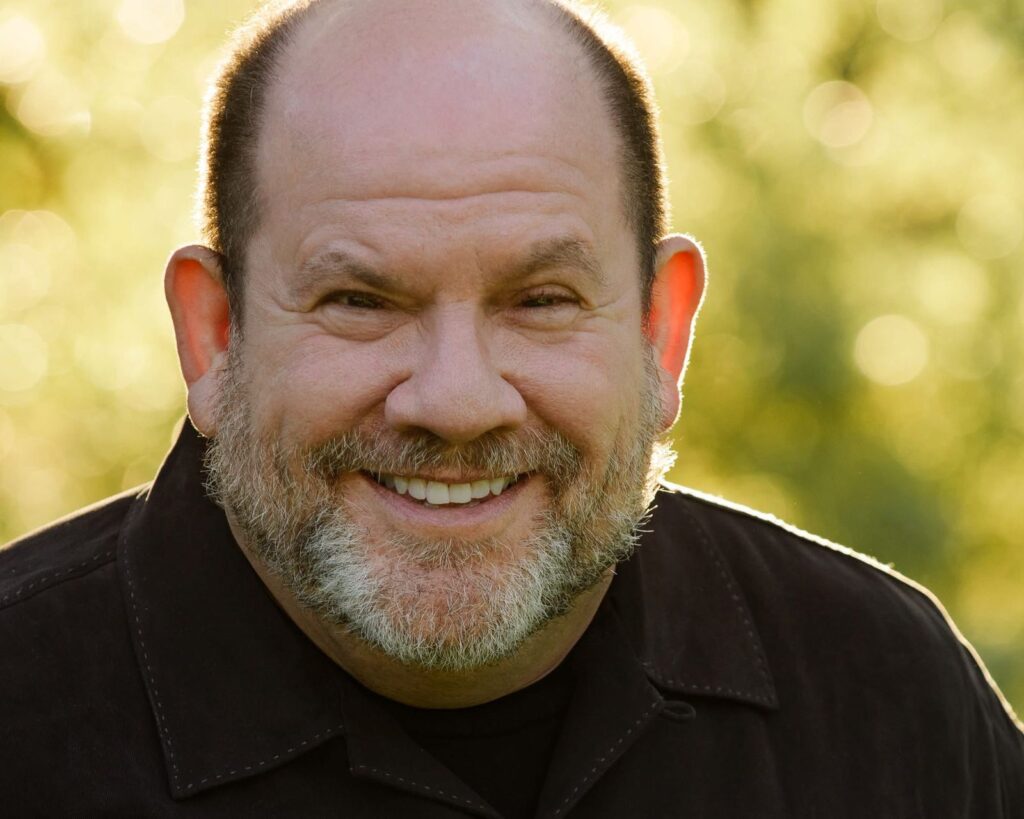
Stan Tatkin: A Field-Defining Contribution
Dr Stan Tatkin is co-founder of the PACT Institute and the originator of the Psychobiological Approach to Couple Therapy (PACT) — one of the few contemporary frameworks to fully integrate attachment theory, affective neuroscience, and real-time dyadic regulation into a coherent clinical method.
While attachment research has shaped psychotherapy for decades, Tatkin’s distinctive contribution has been translating this body of research into precise clinical action inside the couple session, particularly under conditions of escalation, threat, and rupture.
He maintains a highly selective clinical practice in California, working intensively with couples at the limits of regulation and relational stability — cases that continue to refine the rigour, timing, and authority of the PACT model.
PACT is now taught internationally and has shaped modern couple therapy across clinical contexts. This two-evening training offers a rare opportunity to study that architecture directly from its source.
Why Insight Fails Under Pressure
Most therapeutic models assume that increased understanding leads to better behaviour.
But under relational threat, the brain does not organise around understanding.
It organises around survival.
Decades of research in affective neuroscience and attachment have demonstrated that, when threat activates:
- Prefrontal regulation diminishes
- Procedural memory overrides narrative memory
- Defensive action precedes conscious choice
- The nervous system prioritises speed over accuracy
In couple therapy, this means that interventions aimed at reflection, empathy, or communication are often neurobiologically mistimed. They arrive after the nervous system has already decided what must be defended, avoided, or attacked.
PACT was developed in response to this clinical reality — not as another relational philosophy, but as a method for working with these systems as they activate, rather than attempting to reason around them.
What the Therapist Is Actually Treating
At its core, couple distress is not about disagreement.
It is about:
- how quickly partners experience each other as dangerous
- how rapidly threat escalates
- whether attachment reflexes can be inhibited in favour of relational protection
When partners become dysregulated, they are not choosing poorly.
They are enacting implicit survival strategies shaped by early attachment, autonomic patterning, and procedural learning.
At this level, the therapist is no longer working with content.
They are working with timing, arousal, and authority.
Love Under Pressure focuses precisely on this territory:
what the therapist does while regulation is slipping, as memory distorts, and before escalation becomes inevitable.
A Moment Under Pressure
Midway through a session, a couple describes a recent argument about parenting.
The details are familiar, the tone measured. Both partners insist they want the same thing.
Then, almost imperceptibly, something shifts.
One partner’s posture tightens. Their voice sharpens by half a register. The other turns away — not dramatically, but decisively. Within seconds, the room feels different. Words continue, but no one is listening. The therapist notices their own body bracing.
If asked later, neither partner could say precisely when the rupture occurred.
From a PACT perspective, this moment is not mysterious. It marks the transition from cortical engagement to threat-based organisation. Procedural memory has taken over. Attachment reflexes are now steering behaviour. What follows — escalation, withdrawal, moral positioning — is no longer a choice.
The clinical question is not why this happened.
It is what the therapist does next.
This training is concerned with that precise moment — where timing, authority, and intervention determine whether the couple stabilises or continues down a familiar, destructive path.
A Clinical Method — Not a Set of Ideas
Stan Tatkin’s work does not lend itself to slogans or inspirational messaging.
Its value lies in sequence, precision, and clinical judgment.
PACT trains therapists to:
- track threat minute by minute
- recognise when regulation is no longer possible
- intervene at the level of physiology rather than narrative
- use therapeutic authority to stabilise the dyad
- establish secure-functioning principles that hold under stress
These are not abstract concepts. They are in-the-room decisions that shape whether a couple stabilises or collapses in front of you.
This is why PACT cannot be meaningfully absorbed through interviews, podcasts, or short-form clips. Its power lies in understanding why one intervention de-escalates a couple while another — equally well-intentioned — reliably makes things worse.
Two Evenings, One Clinical Arc
This training is deliberately structured to mirror how couple breakdown unfolds — and how it can be interrupted.
Evening One: Threat, Memory, and Attachment Reflex
The neurobiology of couple distress
- How threat activation reorganises perception and behaviour
- Why memory becomes unreliable under relational stress
- How attachment reflexes override conscious intention
- The limits of insight-based intervention when arousal is high
Participants learn to recognise these processes as they unfold in real time — in couples, and in themselves.
Evening Two: Real-Time Intervention and Secure Functioning
Clinical application
- Working directly with procedural memory in the session
- Helping partners regulate each other under pressure
- Interrupting defensive sequences as they arise
- Establishing secure-functioning principles that protect the relationship
The emphasis is on clinical sequencing — what becomes possible only after regulation has been restored, and what must never be attempted before it is.
Why This Training Matters Now
We are working in a climate of heightened threat.
Chronic stress, uncertainty, and overload have lowered the threshold at which couples experience each other as dangerous. Many arrive in therapy already dysregulated, with limited capacity to mentalise under pressure.
Without a neurobiologically informed approach, even experienced therapists can find themselves pulled into escalation — attempting repair while the nervous system is offline.
This training equips clinicians to meet that reality with clarity, authority, and restraint.
Learning from the Originator
In psychotherapy, many ideas circulate widely while their clinical foundations remain poorly understood.
Stan Tatkin is one of the rare clinicians whose work has travelled globally without dilution — precisely because it was built from sustained clinical contact with couples at the limits of regulation, and from a refusal to pretend that insight, goodwill, or communication skills are sufficient when threat is in control.
To learn this work directly from its originator is not simply to acquire new concepts. It is to refine one’s clinical judgment — particularly in moments where many models fall silent.
For therapists who value precision, intellectual seriousness, and work that holds up under pressure, Love Under Pressure offers something increasingly rare: an opportunity to study a field-defining approach at the level at which it actually operates.
This is not a training in how couples should behave — but in how therapists must think when love meets threat.
For clinicians who value precision over reassurance, this may be the most important couple therapy training you attend this year.
© nscience 2025 / 26