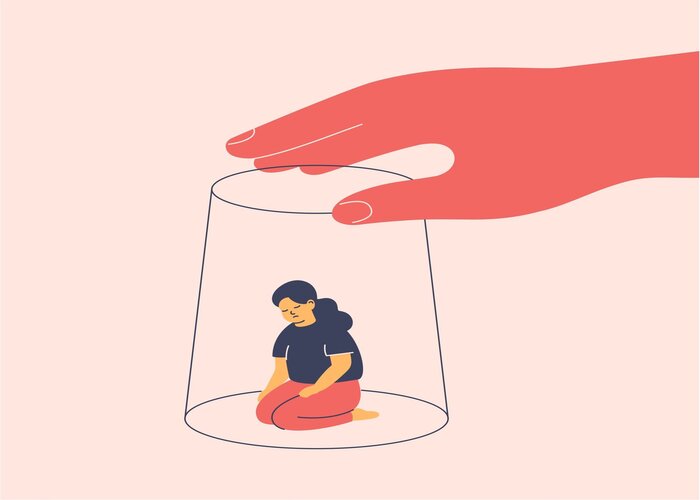
They came to therapy because they love each other.
That is not a small thing. Many of the couples who sit in front of you are not sure they do. These two are. The commitment is not in question. Neither is the effort — both partners are trying, visibly and consistently, to understand each other and to be understood.
And yet the sessions circle. The same ruptures surface in different forms. She describes feeling alone in the relationship — not unloved, but somehow unreached. He describes a persistent sense of failure he cannot account for: of working to meet expectations that seem to shift before he can meet them. Both are exhausted. Neither is wrong.
Something is being missed — not by either partner, but by the framework the therapy is using to understand them. In many cases, that missing piece is neurodiversity.
A Clinical Snapshot
Daniel and Sara (not their real names) have been together for eleven years. They sought therapy after what Sara describes as “years of trying to explain something I can’t quite name.”
In sessions, Sara is expressive and emotionally fluent. She speaks about longing for more spontaneous connection — small moments of warmth, of being noticed, of feeling that Daniel is present with her rather than alongside her. She is careful not to be critical. She genuinely does not want to pathologise the man she loves.
Daniel listens carefully. He takes notes, occasionally. He has researched attachment theory between sessions and arrives with observations about their communication patterns that are, objectively, accurate. When Sara describes feeling alone, he is visibly distressed. He asks, with real sincerity, what she needs him to do differently.
It is that question — what do you need me to do — that leaves Sara quietly despairing in a way she cannot explain.
The therapist notices the gap between Daniel’s effort and Sara’s experience of it. What is less clear is what to do with that gap — or whether the tools available are adequate to what is actually happening in the room.
Professor Attwood’s training with nscience last summer sold out entirely. The question his audience kept returning to afterwards was this one: what happens when the clinical challenge isn’t an individual — but a couple?
This training is our response to that question.
The Missing Lens
For a significant proportion of couples presenting in therapy, the source of relational difficulty is neither attachment insecurity nor a deficit of care, motivation, or insight. It is neurodiversity — specifically, the encounter between two people whose nervous systems process interaction, communication, emotional cues, and sensory experience in fundamentally different ways.
Neurodiverse relationships are far more common in therapy rooms than formal diagnosis rates suggest, with many clinicians encountering these dynamics without a formal label to guide formulation — and most arrive without either partner having a name for what is making things so difficult. The clinician sitting with a couple like Daniel and Sara may never have considered neurodiversity as the organising framework. And yet it may be precisely what the therapy has been missing all along.
The risk, without that lens, is misattribution. Sara’s longing for connection is interpreted as anxious attachment. Daniel’s careful, systematic approach to intimacy is read as emotional unavailability, or avoidance, or a defence against vulnerability. Interventions are built on these formulations — and the couple works hard to implement them. Progress remains elusive. Quietly, each partner begins to wonder whether the problem is simply too deep to reach.
Damian Milton’s concept of the Double Empathy Problem is clarifying here. The difficulty in neurodiverse relationships is not located in one partner’s deficit but in a mutual failure of understanding between people with significantly different ways of processing the world. Neither is failing to empathise. Both are empathising through frameworks the other cannot fully access. The breakdown is interactional, not individual — and this distinction changes everything about how the therapy should proceed.
What This Means for the Therapist
Working with neurodiverse couples places a specific demand on the clinician that goes beyond standard couples training.
The behaviours that most commonly present — one partner’s emotional withdrawal, the other’s escalating bids for connection, the cycles of misattunement that resist repair — are recognisable. The risk is that their familiarity leads to misidentification. What looks like avoidant attachment may be sensory and cognitive overload. What reads as emotional unavailability may be alexithymia — a difference in the capacity to identify and describe internal emotional states, a pattern that is documented extensively in autistic adults. What appears as indifference to the partner’s distress may be an absence of the implicit social cues through which that distress is being communicated.
Maxine Aston’s clinical work drew early attention to the particular distress that can accumulate in the non-autistic partner in these relationships — a distress that is real and deserves clinical attention. What is equally clear is that the autistic partner’s experience warrants its own framework — the exhaustion of sustained social effort, the disorientation of repeated perceived failure, the difficulty of navigating expectations that were never made explicit.
Without a framework that holds both experiences simultaneously, therapy risks becoming another arena in which one partner’s account of the relationship is inadvertently privileged over the other’s – and in which the couple leaves more stuck, not less.
Professor Attwood’s Contribution
Professor Tony Attwood has spent over five decades working directly with autistic individuals, couples, and families. His clinical writing on relationships — including the developmental trajectory of neurodiverse partnerships and the specific dynamics that emerge at each stage — represents some of the most practically useful material available to clinicians working in this area.
What distinguishes his approach is its consistent refusal to locate the difficulty in either partner. The autistic partner is not the problem to be managed. The non-autistic partner is not simply a recipient of misattunement. What is needed — and what this training provides — is a framework for translation: for understanding how each partner’s experience is coherent within their own neurological reality, and for building a therapeutic space in which that mutual coherence can be recognised, named, and worked with.
This is the clinical shift that neurodiverse couples rarely receive — and that most standard couples training does not equip clinicians to provide.
What This Morning Covers
Drawing on five decades of clinical experience, Professor Attwood offers a focused, practice-oriented framework for working with neurodiverse couples. The session explores:
- How autistic and non-autistic partners experience the same relational moment differently — and why this gap is so difficult to bridge without an explicit framework
- How to develop realistic expectations for change in neurodiverse relationships
- Communication strategies that prioritise translation over correction
- The developmental arc of neurodiverse relationships — from early connection through long-term partnership and parenting
- How differences in sensory and emotional processing shape stress, overwhelm, and the capacity for repair
- Differences in affection and intimacy — including why care is often not recognised as care
What Changes for the Therapist
Clinicians who attend this training will leave with something more useful than a set of techniques: a revised way of seeing what is already happening in the room.
The couple who have confused you will become more legible. The cycles that have resisted intervention will have a different explanation — one that does not pathologise either partner and does not require a formal diagnosis to apply. The formulations you have been working from will, in some cases, need revision. That revision is not a clinical failure. It is, for many therapists, a significant relief. You will leave with a way of holding both partners’ experience at once — not as a technique, but as a clinical orientation that can be applied in the very next session.
Who This Training Is For
This morning is designed for psychotherapists, psychologists, and counsellors working with couples, relationships, or adults presenting with relational difficulty. Many participants will have had limited formal training in autism, but significant clinical exposure to these dynamics.
No prior specialisation in neurodiversity is required. What is required is a willingness to consider that some of the couples who have remained stuck in your practice may have been waiting for a framework their therapy has not yet offered them.
A Note on Timing
This training is scheduled at 9:00 AM–12:00 Noon UK to allow live participation from Australia and across the Asia-Pacific region, where Professor Attwood’s clinical influence has been particularly formative. The full recording will be available for twelve months for those unable to attend live.
About Professor Tony Attwood
Professor Tony Attwood is one of the world’s foremost clinical authorities on autism. Over five decades of practice, research, and international teaching, he has shaped how autism is understood, identified, and supported across the lifespan — bringing a level of clinical precision and clarity that has shaped how autism is understood across the lifespan. His books, including The Complete Guide to Asperger’s Syndrome, have become standard reference texts for clinicians, researchers, and families across the globe.
Following his sold-out appearance at our London Neurodiversity Conference, Professor Attwood returns — by popular demand — to lead this focused morning on the neurodiverse relationship: territory he has worked in longer, and thought about more carefully, than almost anyone in the field.
The connection between Daniel and Sara is not the problem.
The framework their therapy has been using to understand them may be.
This training is for clinicians who recognise this pattern — and want to offer something more precise.
© nscience 2025 / 26